
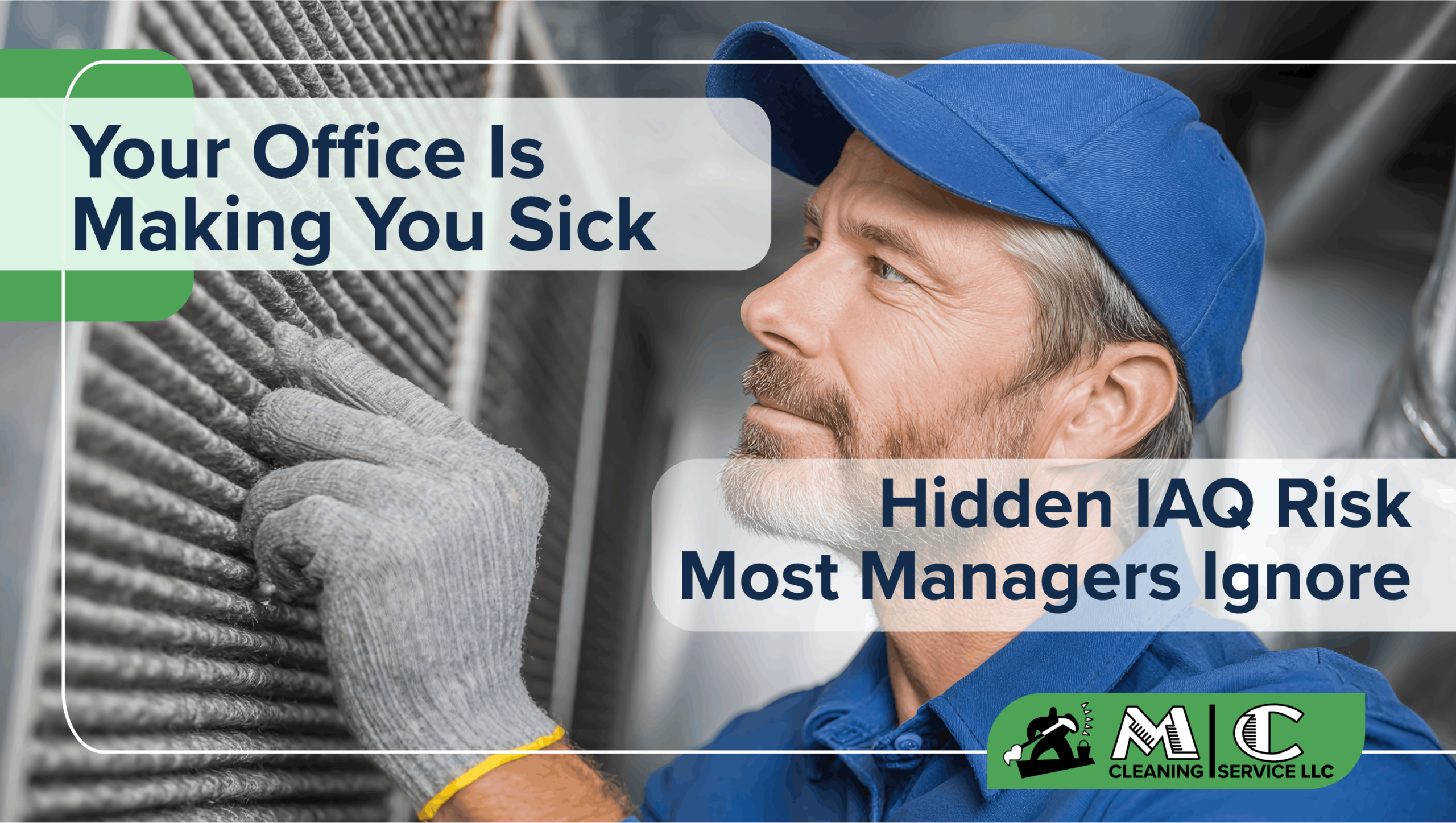
Sick Building Syndrome and IAQ: The Hidden Risk Lurking in Massachusetts Offices
Learn how poor indoor air quality (IAQ) could be making your team sick—and what cleaning strategies can help fix it.
If you manage a commercial property in Southeastern Massachusetts, you’ve probably dealt with vague tenant complaints: headaches, dry eyes, fatigue, or even recurring coughs—especially in winter or after HVAC work.
What many don’t realize is that these symptoms may not come from stress or a seasonal cold. They could stem from a documented issue known as Sick Building Syndrome (SBS), often caused by poor indoor air quality (IAQ) and inadequate cleaning.
At MC Cleaning Service, we treat IAQ as a frontline priority—not a side concern. Here’s what you need to know about this hidden risk and how strategic cleaning practices can make your workplace healthier and more productive.
What Is Sick Building Syndrome?
Sick Building Syndrome refers to a pattern of health symptoms linked to time spent inside a building, with no specific illness or cause identified. The U.S. Environmental Protection Agency (EPA) lists common culprits such as:
- Poor ventilation
- Chemical contaminants from cleaning products
- Biological contaminants like mold, dust, or pollen
- VOCs (volatile organic compounds) from carpets, paint, or furniture
SBS most often affects office workers, students, and healthcare staff—anyone spending 6+ hours per day in enclosed, climate-controlled spaces.
Common Symptoms to Watch For
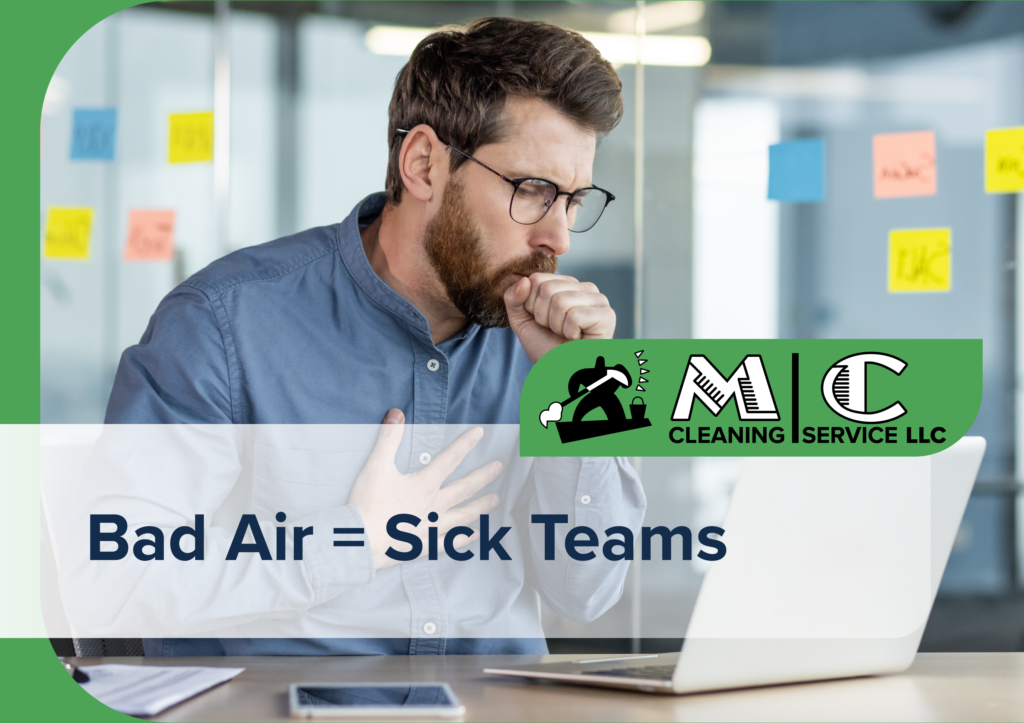
If multiple tenants or employees report similar symptoms that ease when they leave the building, IAQ could be the root cause. Watch for:
- Dry, itchy eyes
- Nasal congestion
- Headaches
- Dizziness or fatigue
- Respiratory irritation
- Difficulty concentrating
Even if your building looks clean, unseen contaminants in ductwork, carpets, and office furniture may be quietly triggering these issues.
IAQ and Cleaning: What’s the Connection?
While HVAC upgrades and air purifiers play a role, cleaning is your first line of defense against SBS. At MC Cleaning Service, we deploy targeted strategies to improve indoor air:
- HEPA-filtered vacuuming to capture fine dust, pollen, and dander
- Green-certified products to reduce chemical fumes and VOCs
- Regular cleaning of air vents, blinds, and baseboards
- Mattress and upholstery cleaning for shared seating areas
- Moisture control protocols to prevent mold and mildew growth
We customize these strategies based on your building’s materials, usage, and layout—whether you manage a law office, school, or medical clinic in Taunton or Norton.
IAQ and Productivity: A Business Imperative
Beyond comfort, air quality directly affects how well people work. Studies show that poor IAQ can reduce cognitive performance by 5–10% and lead to:
- Higher absenteeism
- Increased employee turnover
- More sick days and insurance claims
- Lower tenant satisfaction scores
In contrast, buildings with health-first cleaning programs experience higher retention, faster tenant lease-ups, and fewer complaints—especially in post-pandemic Massachusetts.
Why Partner With MC Cleaning Service?
We’re more than janitors—we’re an experienced facility partner who understands the science behind your workplace health. Our team is trained in:
- Indoor allergen reduction
- Commercial IAQ maintenance
- Chemical safety and dilution
- Floor and fabric protocols that preserve air purity
With over 30 years serving Bristol County, we’re trusted by local schools, clinics, offices, and multi-unit properties for a reason: we make the invisible, breathable.
Book an IAQ-Focused Cleaning Assessment Today
Don’t let Sick Building Syndrome quietly harm your team or tenants. A proactive cleaning strategy can restore comfort, protect health, and improve performance—without major HVAC upgrades or costly renovations.
Schedule a site assessment today and let MC Cleaning Service help you breathe easier.
FAQs
How do I know if my building has Sick Building Syndrome?
If multiple people report similar symptoms that disappear off-site, IAQ is a likely factor. We can help investigate with a targeted cleaning review.
What types of buildings are most affected?
Offices, clinics, schools, and older buildings with recirculated air systems are most vulnerable.
Is this type of cleaning only for large facilities?
No—we scale our IAQ protocols for small offices, residential buildings, and everything in between.
How long does it take to see results from IAQ-focused cleaning?
Many clients report noticeable improvement in symptoms and comfort within a few cleanings.
Do I need to change products or routines to support better air quality?
Yes—and we’ll guide you through it. We provide green-certified alternatives that clean thoroughly without chemical residue.